Art provenance that travels
with the work.
Paintings, sculpture, photography, prints; contemporary, modern, Old Masters, street art, digital art, installation, museum-quality works. A Vault holds the artwork provenance chain, the condition reports, the authentication, the exhibition history, the literature and the sale records - the collector's own art provenance file, read under scope - and, through a regulated ownership vehicle, a route to shared ownership.
- Acquisition · invoice and bill of saleDealer
- Condition report · on receiptConservator
- Exhibition loan · catalogue entryMuseum
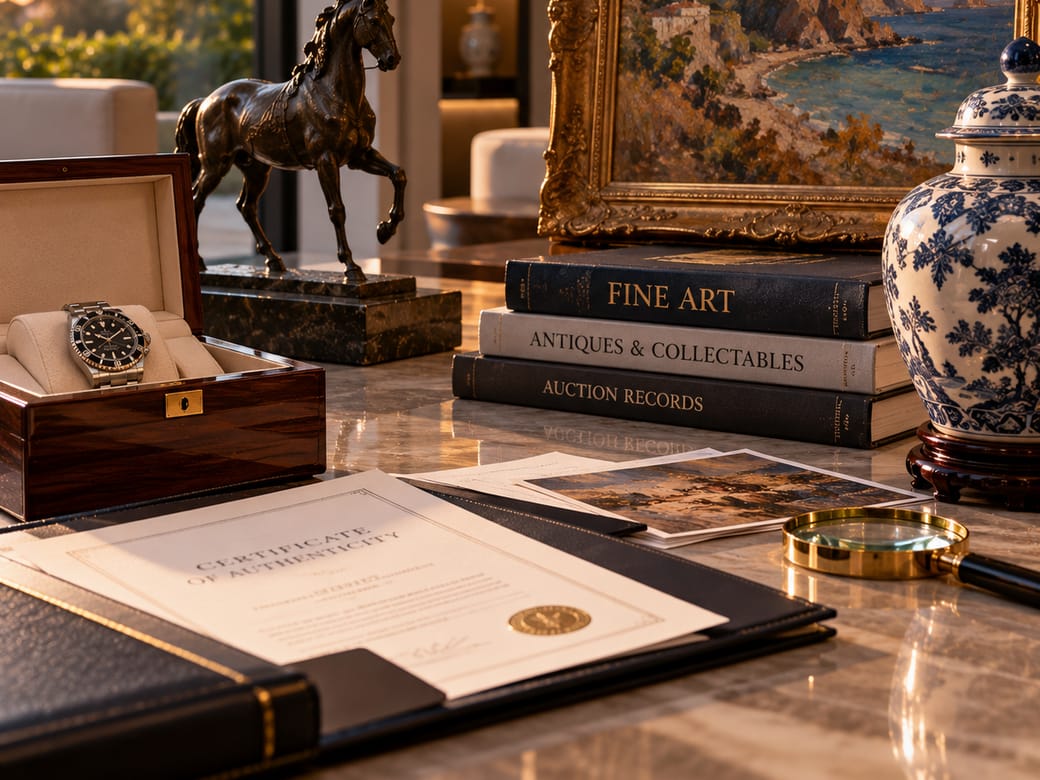
- Certificate of authenticityIssuer listed, not verified
One record type. Every medium, every period.
Art is designed for - register interest. Antiques, rare books and coins sit in Collectables.
Medium
Roadmap · subject to approvalsPeriod and market
Roadmap · subject to approvalsThe whole art provenance file, in one place the collector owns.
A work's Vault begins with its natural keys, held off-chain and never published, under one digital asset identity. Nothing reachable from the ledger identifies the work or its owner.
-
Natural keysHeld off-chain, never public.ArtistTitle · dateMedium · dimensionsCatalogue raisonné ref.PV-GB-{AREA}-{6 digits}
-
DocumentsHashed on upload, receipt issued.Invoices and bills of sale Art certificates of authenticity Condition reports Conservation records Exhibition history and loans Literature Export licences Insurance valuations
-
EventsEach with per-stage evidence.AcquisitionConservationExhibitionAuthenticationValuationSale
Art provenance research: what a complete file contains.
Provenance is the documented history of a work's ownership and custody; authentication is an opinion on attribution. The Vault keeps both, sealed to their issuers and dates, and never confuses one for the other: an art certificate of authenticity is only as strong as whoever issued it, and the record says who that was.
Art collection management for many works
A collector with many works, a gallery or a foundation keeps each work's Vault in one Business Vault through Pro - asset register software with scopes for the insurer, the lender and the museum registrar. Launching.
Ownership and attribution
- Invoices and bills of sale from each transaction, studio to present owner
- Art certificate of authenticity from the artist, studio, estate or foundation, with its issuer named
- Catalogue raisonné entry or correspondence with the compiler
- Art authentication opinions and committee letters, read as signals, never as judgements
- Photographs of recto and verso, including labels, stamps and inscriptions on the reverse
Condition, exhibition and movement
- Condition reports on acquisition and before and after each loan or transport
- Conservation treatment records from the conservator
- Exhibition history: loan agreements and catalogue entries
- Literature references and publication history
- Export licences, insurance valuations and shipping records
Issued by the trade. Read by those who carry the risk.
Who registers
- Dealers and auction houses - invoice, lot and sale record: the Provenance Passport.
- Conservators - condition and treatment reports, as registered professionals.
- Foundations and authenticators - catalogue raisonné inclusion and opinion letters, read as signals, never as judgements.
- The collector - receipts and photographs.
Who reads, under scope
- Insurers - the schedule at inception, the record at claim: Claim Evidence Report.
- Lenders - the documents beside the valuation.
- Museums - condition and provenance before a loan.
- The next buyer - a time-limited scope showing the art provenance chain, not the collector.
Art provenance, stage by stage. The same published engine.
Vault Score is a verification score - whether the documents exist, who issued them and that they are unaltered since issue; never a valuation, a credit input or a judgement of the work.
Vault Score
Computed by a published rules engine; owner-only evidence capped at 65; listed-but-unverified issuers ×0.8.
The verification score method, publishedVerified History
Every event, document and owner, sealed and graded by who issued it. A gap in the art provenance is recorded as a gap; the next buyer sees what exists.
How Verified History records asset provenanceA major work, held in a vehicle, owned in shares.
Property Vault Markets - tokenised ownership, collateral and lending for verified real-world assets on the XRP Ledger - launches through regulated partners, subject to regulatory approvals. A pointer token that follows a Vault ID is a pointer to the record, never title. Roadmap · subject to approvals
Structures served
- Fractional ownership of a single work through an SPV or trust, issued by an FCA-authorised issuer or Digital Securities Sandbox participant
- Art-backed loans through regulated lenders
Eligibility is a minimum Vault Score and a clean statutory record. Property Vault supplies the Vault ID, Verified History, Vault Score and eligibility data; it never hosts an offer, gates holders, runs a venue, holds keys or moves money.
A market that runs on art provenance, and keeps it on paper.
Estimates of how much of the market is misattributed vary widely and are not quoted here. The proof lives in a dealer's letter, a conservator's report, a foundation's opinion - each held by a different party, each re-requested at every sale. A work's Vault keeps the art provenance, sealed and graded, with the owner.
Where Art stands today.
Vault ID, Verified History, sealed documents and the Vault Score engine are live in pilot for Property. Art provenance opens as the dealers, auction houses and foundations who register works sign - register interest and we will tell you when. Art records are being tested in a founder trial on the founder's own collection, with evidence provided by the owner; they are not generally available.
Art provenance: common questions
Provenance, authentication, certificates and what the record never does.
What is art provenance?
The documented history of a work's ownership and custody, from the artist's studio to its present owner, with the exhibitions, publications, conservation and sales along the way. In a Vault each link is a sealed document named to its issuer and date; a gap is recorded as a gap. It is the same asset provenance record every class uses.
What is the difference between art provenance and art authentication?
Provenance is the chain of ownership and custody; authentication is an opinion on attribution from a foundation, committee or specialist. The Vault seals both and grades each by who issued it. It reads opinion letters as signals, never as judgements, and never authenticates a work itself.
Is an art certificate of authenticity enough on its own?
No. A certificate is only as strong as its issuer. The Vault records who issued it, when, and whether it is unaltered since; an issuer that is listed but not verified is marked as such and weighted ×0.8. The Vault Score is a verification score - whether the documents exist, who issued them and that they are unaltered since issue; never a valuation, a credit input or a judgement of the work.
Can someone look up who owns a painting?
No. There is no public lookup by artist, title or owner, and nothing reachable from the ledger identifies the work or its owner. The next buyer, a museum or an insurer reads under a time-limited scope that shows the chain, not the collector; every open is logged.
How often should a condition report be made?
Common practice is on acquisition, before and after any loan or transport, and after treatment. Each report is sealed with its conservator and date, so the exhibition history and the condition history line up on one timeline and the next reader sees how current the last report is.
Does the Vault help with art collection management?
Yes. Each work keeps its own Vault ID, Verified History and Vault Score; a collector, gallery or foundation holds them in one Business Vault through Pro, with scopes for the insurer, the lender and the registrar. A dealer or auction house issues the sale as auction house provenance through the Provenance Passport; insurers read the schedule as insurance claim evidence. Launching.
Is the Art class live?
Art is designed for - register interest. Art records are being tested in a founder trial on the founder's own collection, with evidence provided by the owner; they are not generally available. The engine beneath it - Vault ID, Verified History, sealed documents and the Vault Score - is live in pilot for Property, and watches and jewellery are the next class; see watch provenance. Fractional ownership and art-backed lending launch through regulated partners, subject to regulatory approvals.
Give the work a record that outlasts its owners.
Tell us which works you would register first.