Your collectables inventory,
catalogued and verified.
A collectables inventory for trading cards (Pokémon, Magic, sports), match-worn shirts and signed memorabilia, film props and posters, LEGO and die-cast, rare books and manuscripts, antiques and clocks, limited sneakers, gold and silver bars, sovereigns and rare coins. A Vault holds the grading, the memorabilia provenance, the photographs and the ownership - one private collection management app, so a collection can be insured, sold or, through regulated partners, financed.
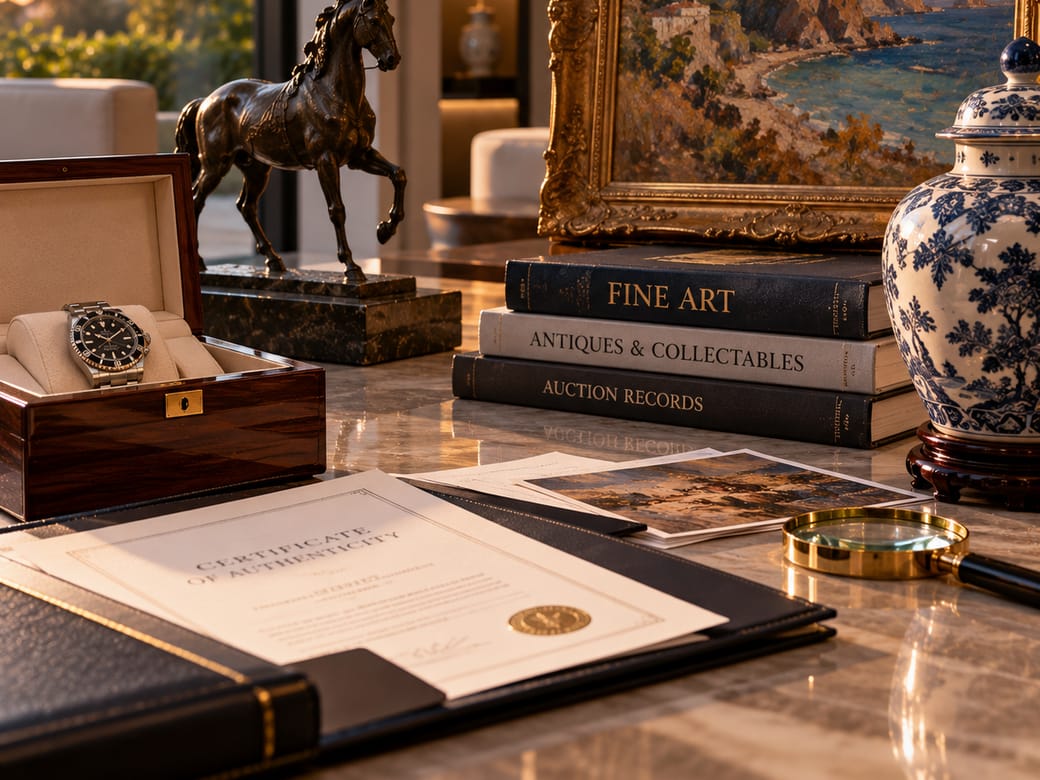
- Grading slip · cert matchedGrading service
- Auction invoice · lot recordAuction house
- Vault receipt · bar serialBullion vault
- Letter of authenticityIssuer listed, not verified
Eight sub-classes, one collectables inventory.
Paintings belong in the art provenance class; casks and cellars in whisky cask ownership and wine provenance.
Sports
Entertainment
Toys
Trading cards
Rare books and manuscripts
Sneakers
Antiques
Coins and precious metals
Grading, paper and photographs, held by the collector.
Natural keys stay off-chain. No public lookup by serial; nothing on the ledger identifies the piece or its owner. Precious metals records - bar serial, weight, fineness and the custodian's receipt - sit beside the coins they accompany.
-
IdentifiersNatural keys private; one Vault ID per piece.Grading cert no. (PSA, BGS, CGC)Hallmark · assay markBar serial · weight · finenessEdition no. · set no.PV-GB-{AREA}-{6 digits}
-
DocumentsHashed on upload, receipt issued; corrections as new versions.Grading slips Letters of authenticity Auction invoices Photographs Insurance schedules Vault receipts for bullion
-
EventsEach with per-stage evidence.GradingAuthenticationExhibitionValuationSale
Issued by the trade. Read by those who carry the risk.
Collectors own the Vault and grant every scope; opens are logged.
Who registers
- Grading services - the grade and certificate number, building a graded card registry the collector controls.
- Auction houses and dealers - lot, invoice and sale, through the Provenance Passport.
- Specialist authenticators - letters of authenticity, hallmark and assay; antiques provenance for furniture, clocks and ceramics.
- The collector - receipts and photographs.
Who reads, under scope
- Insurers - the schedule at inception, the sealed record at claim: Claim Evidence Report.
- Buyers - a time-limited scope: the chain, not the collector.
- Regulated lenders - the documents beside the valuation, under a collateral verification scope.
Collectables inventory stages, scored by the same published engine.
Vault Score is a verification score - whether the documents exist, who issued them and that they are unaltered since issue; never a valuation, a credit input or a judgement of the work.
Vault Score
A published rules engine: owner-only evidence capped at 65; listed-but-unverified issuers ×0.8. A grade is not a Vault Score.
The verification score method, publishedVerified History
Every event, document and owner, sealed and graded by issuer. A re-graded card keeps both slips.
How Verified History builds asset provenanceVaulted gold and fractional collections - described, not offered.
Property Vault Markets - tokenised ownership, collateral and lending for verified real-world assets on the XRP Ledger - launches through regulated partners, subject to regulatory approvals. Any pointer token is a pointer to the record, never title. Roadmap · subject to approvals
- Vaulted gold: bar serial and custodian receipt sealed in the Vault; ownership recorded by a regulated issuer
- Fractional collections, issued by an FCA-authorised issuer or Digital Securities Sandbox participant
Eligibility is a minimum Vault Score and a clean statutory record. Property Vault supplies the Vault ID, Verified History, Vault Score and eligibility data; it never hosts an offer, gates holders, runs a venue, holds keys or goods, or moves money. How a pointer token works is on the asset tokenisation platform page; how a regulated lender reads a collection is under Lending & Collateral.
Priced on grade and provenance. Proof kept in a shoebox.
Publishers disagree by almost two to one, so we quote only the range. The proof sits in a drawer, an inbox or with an issuer that has closed. A Vault keeps it sealed, with the owner - a collectables inventory that is dated, issuer-graded and unaltered since issue is the difference between a claim and a record.
Where the Collectables class stands today.
Vault ID, Verified History and the Vault Score engine are live in pilot in the Homes app. The Collectables class is designed for; it opens as graders, auction houses and dealers sign. Every class shares one digital asset identity format across the real-world asset classes.
Dealers and auction houses
Auction house provenance: the sale record, at the sale.
Provenance PassportInsurers
Insurance claim evidence: the schedule, proven at claim.
Claim Evidence ReportArt
Paintings, sculpture, photography, prints.
The Art classConsumable Collectables
Casks and cellars, history sealed in.
Wine & SpiritsCollectables inventory questions.
What collectors, graders, dealers and insurers ask about keeping a collectables inventory in a Vault.
What is a collectables inventory in Property Vault?
One Vault per piece or lot: a Vault ID, the grading slip, letters of authenticity, auction invoices, photographs and insurance schedules, each hashed on upload and given an integrity receipt, with every event in date order. It is a record the collector controls, not a marketplace and not a valuation.
Is Property Vault a collection management app?
It is the record layer a collection management app needs: a permanent identity per piece, sealed documents, a Verified History graded by who issued it and a Vault Score. The Collectables class is designed for - register interest. Vault ID, Verified History and the Vault Score engine are live in pilot in the Homes app.
Does a graded card registry replace PSA, BGS or CGC certificates?
No. The grading service issues the grade and the certificate number; the Vault records them against the card, sealed, so the slip, the auction invoice and the photographs travel together through every sale. A re-graded card keeps both slips, and the collectables inventory shows which came first.
Does the record cover coins and precious metals?
Yes. Sovereigns, rare and ancient coins and numismatic collections sit beside gold, silver, platinum and palladium bars. Precious metals records carry the bar serial, weight, fineness, hallmark or assay mark and the custodian's vault receipt, all held off-chain with no public lookup - the coin collection app side of the same Vault.
Is my collection visible to anyone?
No. There is no public lookup by serial or certificate number. A Vault is read only under a scope the collector grants - an insurer at claim, a buyer for a time-limited window, a regulated lender beside a valuation - and every open is logged.
Can a collection be insured, sold or financed from the record?
An insurer reads the schedule at inception and the sealed record at claim through the Claim Evidence Report; a dealer or auction house issues the sale through the Provenance Passport. Lending against a verified collection is through regulated lenders - launching through regulated partners, subject to regulatory approvals. Property Vault never lends, hosts an offer or holds the pieces.
Give the collection a record that outlasts the shoebox.
Tell us what you would register first.